UAV Flight Controller Guide: Choosing an Autopilot, GNSS and RTK
What to compare when choosing a UAV flight controller: processor, sensor redundancy, interfaces and vehicle support, plus SIYI GNSS and RTK positioning modules.

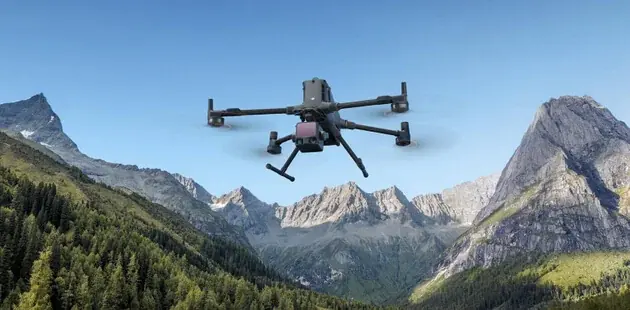
A flight controller, or autopilot, is the computer that keeps an unmanned vehicle stable and on its route. It reads inertial sensors, a compass, a barometer and satellite positioning, runs the control loops and drives the motors and servos of a multirotor, fixed-wing aircraft, ground vehicle or boat.
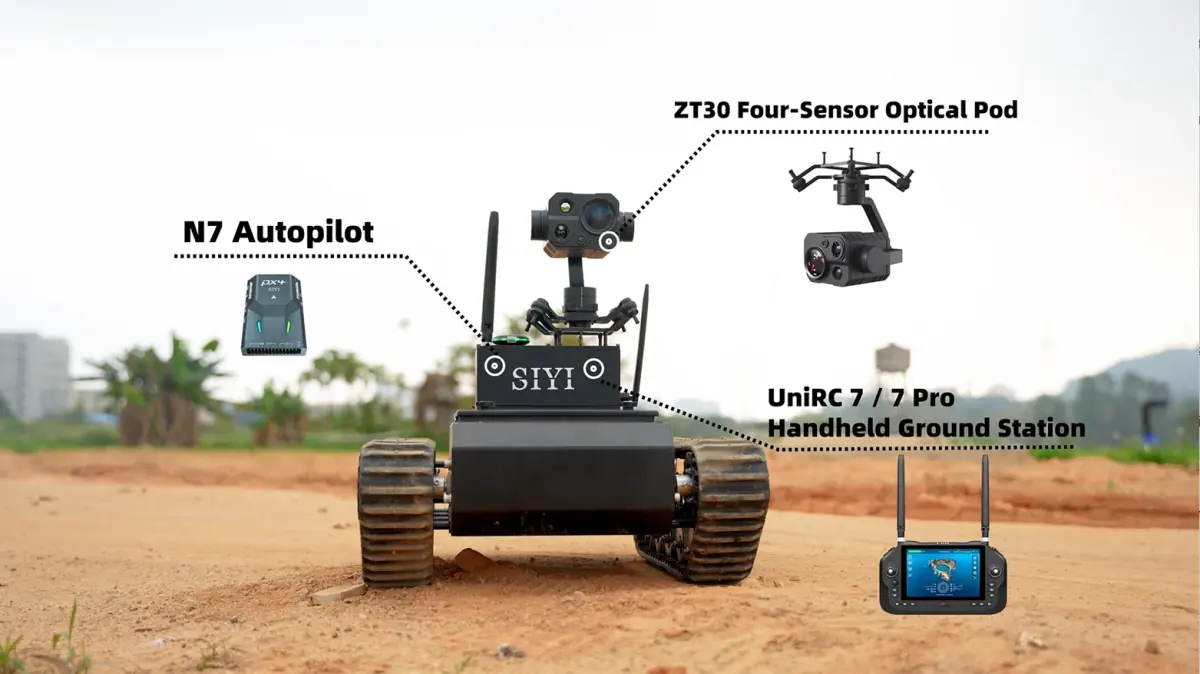
SIYI's autopilot range has two flight controllers, the N7 and the UniFC 6 PICO, supported by GNSS and RTK modules, power modules and an airspeed sensor. This guide sets out what to compare, using the manufacturer's specification tables.
Open-source ecosystems: ArduPilot and PX4
ArduPilot and PX4 are open-source autopilot firmware projects. Integrators use them because code and parameters are open to inspection and tuning, and because one firmware family and its ground control software cover many vehicle types. Both SIYI controllers are specified for PX4 and ArduPilot firmware, and SIYI's N7 description names QGroundControl and Mission Planner. The N7 FAQ adds that commissioning requires knowledge of open-source flight controllers.
The decisions that matter
- Processor: both controllers use the STM32H743IIK6, a 32-bit Arm Cortex-M7 at 480 MHz. The N7 adds an STM32F103 co-processor.
- Sensors and redundancy: redundancy means a second sensor is available if one fails. The N7 lists two IMUs, one compass and one barometer; the UniFC 6 PICO lists two IMUs, one compass and two barometers. SIYI describes IMU heating for low temperatures on both, and counts the GPS module's compass as the N7's second magnetometer.
- Interfaces: UART serves telemetry links and GNSS, CAN serves DroneCAN devices, I2C serves sensors and PWM drives motors and servos. The N7 has 4 UART, 3 I2C, 1 CAN and 8 standard PWM plus 5 programmable IO; the UniFC 6 PICO has 5 UART, 3 I2C, 2 CAN and 14 PWM outputs.
- Vehicle types: both tables list multirotors, fixed-wing aircraft, helicopters, VTOL, UGVs and USVs, and SIYI's N7 description also mentions smart robots, so one controller family can serve UAV, UGV and USV projects.
- Power input: each controller takes 4.5 ~ 5.5 V from its power module, which must suit the vehicle's battery. Servo voltage input is 0 ~ 10 V on the N7 and 0 ~ 9.5 V on the UniFC 6 PICO.
- Size and weight: the N7 is 47 x 68 x 19 mm and 57 g; the UniFC 6 PICO is 49 x 42.6 x 16.2 mm and about 40 g.
- Operating temperature: -20 ℃ ~ 65 ℃ for the N7 and -30 ~ 60 ℃ for the UniFC 6 PICO.
N7 and UniFC 6 PICO compared
| Specification | N7 | UniFC 6 PICO |
|---|---|---|
| Main processor | STM32H743IIK6 (32-bit Arm Cortex-M7, 480 MHz, 2 MB memory, 1 MB RAM) | STM32H743IIK6 (32-bit Arm Cortex-M7, 480 MHz, 2 MB memory, 1 MB RAM) |
| Co-processor | STM32F103 (32-bit Arm Cortex-M3, 72 MHz, 20 KB SRAM) | - |
| Accelerometer / gyro | BMI088 / ICM20689 | ICM45686 / BMI088 |
| Electronic compass | IST8310 | IST8310 |
| Barometer | MS5611 | ICP20100 x2 |
| UART serial ports | 4 | 5 |
| I2C | 3 | 3 |
| CAN | 1 | 2 |
| PWM output | 8 x standard PWM IO / 5 x programmable IO | 14 |
| RC input | SBUS, PPM | SBUS, PPM |
| Compatible firmware and vehicles | PX4 / ArduPilot firmware (planes, multirotors, helicopters, VTOL, UGV, USV) | PX4 / ArduPilot firmware (UGVs, USVs, fixed-wing, 3–8 axis multi-rotor, helicopter, VTOL, etc.) |
| Power module voltage input | 4.5 ~ 5.5 V | 4.5 ~ 5.5 V |
| Servo voltage input | 0 ~ 10 V | 0 ~ 9.5 V |
| Working temperature | -20 ℃ ~ 65 ℃ | -30 ~ 60 ℃ |
| Dimensions | 47 x 68 x 19 mm | 49 x 42.6 x 16.2 mm |
| Weight | 57 g | About 40 g |
SIYI's description of the UniFC 6 PICO also lists a 100 Mbps Ethernet port for an onboard computer and switchable 3.3 V / 5 V PWM output; the Ethernet port is not itemised in the specification table.
Positioning: GNSS or RTK
A standard GNSS receiver locates the vehicle to within metres, enough for general navigation. RTK applies corrections from a base station or a network service to reach centimetre level, the grade needed for work such as surveying and mapping. With two antennas or two modules, an RTK system can also derive heading from satellites, which helps where magnetic interference makes a compass unreliable.
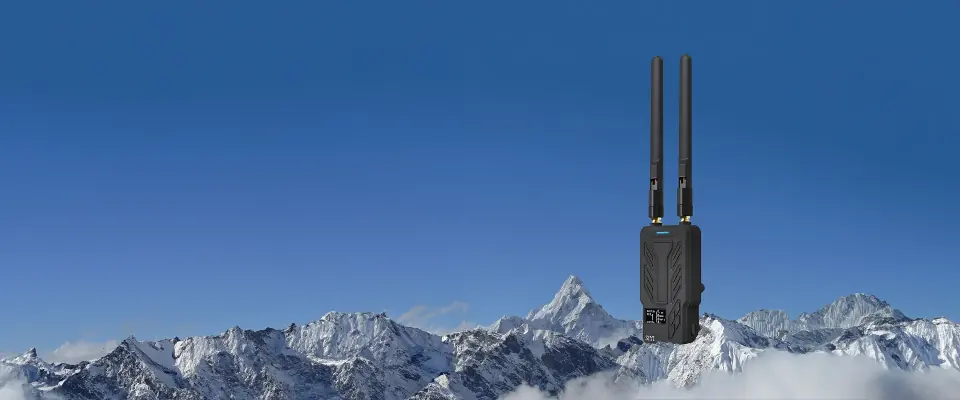
SIYI lists four positioning modules. The M9N GPS and UniGNSS M10 are GNSS modules with an IST8310 compass, status light, buzzer and safety switch; the M10 communicates over DroneCAN. The RTK Positioning & Orientation Module delivers positioning and heading from one module with two antennas. The F9P RTK uses the same hardware as mobile station or base station, and two mobile stations give heading. Per SIYI's FAQ, corrections can come from a network RTK service via a SIYI handheld ground station or link, or from an F9P RTK base station.
| Specification | M9N GPS | UniGNSS M10 | RTK Positioning & Orientation Module | F9P RTK |
|---|---|---|---|---|
| Satellite receiver | - | UBX-M10050 | GPS / GLONASS / Beidou / Galileo / QZSS | 184 channel ZED-F9P (Ublox) |
| Satellite bands | - | GPS L1 C/A; QZSS L1 C/A, L1S; GLONASS L1OF; BeiDou B1I/B1C; Galileo E1B/C; SBAS L1 C/A | Antenna 1: Beidou B1I, B2I, B3I; GPS L1C/A, L2P(Y) / L2C, L5; GLONASS L1, L2; Galileo E1, E5a, E5b; QZSS L1, L2, L5. Antenna 2: Beidou B1I, B2I, B3I; GPS L1C/A, L2C; GLONASS L1, L2; Galileo E1, E5b; QZSS L1, L2 | GPS L1C/A, L2C; GLONASS L1OF, L2OF; Galileo E1B/C, E5b; BeiDou B1I, B2I; QZSS L1C/A, L2C |
| Positioning accuracy | - | Horizontal: 1.5 m CEP | Horizontal: 0.8 cm + 1 PPM; elevation: 1.5 cm + 1 PPM | 1 cm + 1 ppm |
| Single point positioning | - | - | Horizontal: 1.5 m; elevation: 2.5 m | 1.5 m CEP |
| Heading accuracy | - | - | Dual antenna: baseline 1 m, orientation accuracy 0.2 degree | Dual antenna: (0.25 / R)°, where R is the distance in metres between the two mobile station antennas. Dual-module direction finding: yaw accuracy 0.35 deg (for reference) |
| Interfaces / communication protocol | - | DroneCAN | 1 x UART & I2C / 1 x UART / 1 x USB (Type-C) | 2 x UART / 1 x USB (Type-C) |
| Weight | - | 31 g | 22.8 g | 31 g |
Accuracy values are reproduced as the specification tables state them; the '+ 1 PPM' term grows with distance from the base station. SIYI publishes no specification table for the M9N GPS, so its column shows dashes.
Supporting modules and next steps
Two power modules feed the controller and report battery data. The Hall Effect Current Sensor Power Module accepts 7 ~ 100 V and measures current without contact up to 180 A; the N7 Flight Controller Power Module accepts 2 ~ 14 S and measures up to 120 A. For fixed-wing and VTOL aircraft, the MS4525 Airspeed Module measures airspeed to help prevent stalls and works with ArduPilot or PX4 flight controllers.
To continue, set the controllers or positioning modules side by side on the compare page, narrow the options with the product finder, or contact us with your vehicle type, payload and accuracy requirement.
Frequently asked questions
Which firmware do the N7 and UniFC 6 PICO support?
Both are specified for PX4 and ArduPilot firmware, with vehicle lists that cover multirotors, fixed-wing aircraft, helicopters, VTOL, UGVs and USVs.
What is the main difference between the N7 and the UniFC 6 PICO?
They share the STM32H743IIK6 main processor. The N7 adds an STM32F103 co-processor and weighs 57 g, while the UniFC 6 PICO weighs about 40 g and lists 5 UART, 2 CAN, 14 PWM outputs and two barometers.
Do I need RTK, or is a standard GNSS module enough?
A GNSS module such as the UniGNSS M10, listed at horizontal 1.5 m CEP, covers general navigation. Choose RTK when the task needs centimetre-level figures such as the F9P RTK's 1 cm + 1 ppm, which depend on corrections from a base station or network.