
UAV Flight Controller Guide: Choosing an Autopilot, GNSS and RTK
What to compare when choosing a UAV flight controller: processor, sensor redundancy, interfaces and vehicle support, plus SIYI GNSS and RTK positioning modules.
Autopilot · Power Module
7–100 V flight controller power module with a non-contact Hall current sensor
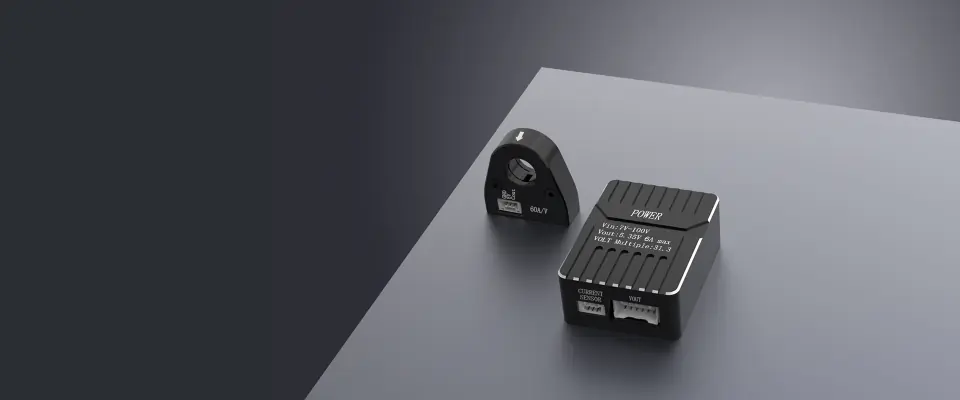
This set pairs a flight controller power module with a separate Hall current sensor. The power module accepts 7–100 V, supplies 5.35 V (±0.03 V) to the flight controller and detects battery voltage, while the Hall sensor measures current without contact to ±0.1 A, with a recommended range of up to 180 A. It works with any flight controller that supports ADC sampling, open-source or closed-source.
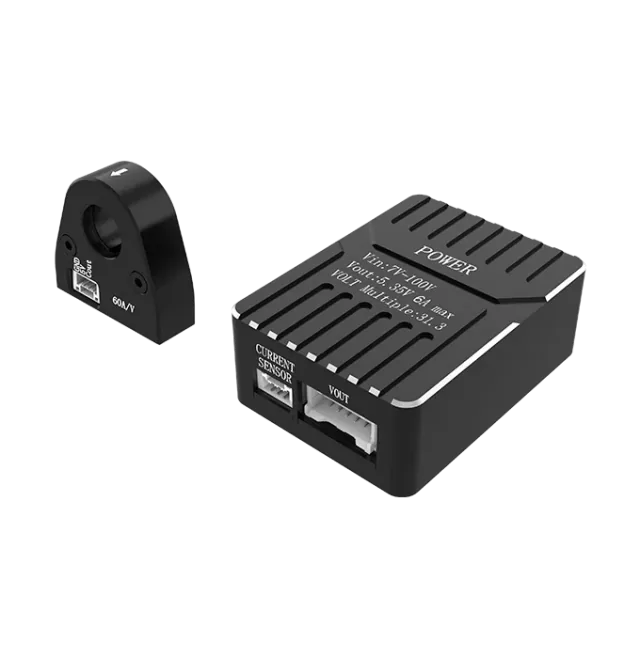
The power module takes 7–100 V and outputs 5.35 V (±0.03 V) to the flight controller. Maximum output current is 6 A and varies with the input voltage.
The Hall sensor measures current to ±0.1 A at a ratio of 60 A/V, with a maximum measuring current of 180 A.
Non-contact sensing avoids errors from contact resistance or poor contact, and there is no sampling resistor to run hot at high current.
The Hall sensor measures 25 x 25 x 9 mm and weighs 9.4 g. Its wire hole is 9 mm in diameter and 21 mm long.
The aluminum alloy structure spreads heat evenly. The power module measures 42.5 x 31.5 x 16 mm and weighs 28.6 g.
The power module powers the flight controller and the Hall sensor and detects battery voltage; the Hall sensor only measures current. The voltage divider ratio is 31.303.
| Voltage Input Range | 7 ~ 100 V |
|---|---|
| Voltage Divider Ratio | 31.303 |
| Voltage Output | 5.35 V (±0.03 V) |
| Max Current Output | 6 A |
| Product Dimension | 42.5 x 31.5 x 16 mm |
| Product Weight | 28.6 g |
| Current Measuring Accuracy | ±0.1 A |
|---|---|
| Measuring Radio | 60 A / V |
| Max Measuring Current | 180 A |
| Wire Hole Diameter | 9 mm |
| Wire Hole Length | 21 mm |
| Product Dimension | 25 x 25 x 9 mm |
| Product Weight | 9.4 g |
Item names as listed by SIYI. Contents can vary by combo.
Specifications are taken from the SIYI website as of 1 October 2026 and may be revised by the manufacturer without notice. View this product on the SIYI website
SIYI has not published a reference configuration that names this model. Products in the Autopilot line are used in solutions for these platforms.
Files are served by SIYI, as listed on 1 October 2026. Check the SIYI download page for the latest versions.
Up to 180 A is recommended. With the 60 A/V ratio and a 3.3 V ADC, the detection range actually extends to 198 A.
It comes as two separate units, a power module and a Hall sensor, and both connect to a flight controller. The power module feeds the flight controller with 5.35 V, reads battery voltage and powers the Hall sensor, which measures current only.
Conventional power modules sense current with a sampling resistor, which tends to run hot at high current. Here a Hall sensor reads the current without contact, so that heat does not degrade measurement accuracy or safety.
Any flight controller that supports ADC sampling can use it, whether open-source or closed-source.
Yes. The 180 A figure is the recommended upper limit for measurement, not a limit on the current passing through the Hall sensor.
At 5.35 V output the module delivers 5 A at 7.5 V input; 6 A at 11.5 V, 15 V, 18.5 V, 22.2 V, 25 V and 30 V; 5.5 A at 35 V and 40 V; 5.2 A at 45 V; 5 A at 50 V; 4 A at 60 V; 3.5 A at 70 V; 2.7 A at 80 V; 2 A at 90 V; and 1.5 A at 100 V.
What to compare when choosing a UAV flight controller: processor, sensor redundancy, interfaces and vehicle support, plus SIYI GNSS and RTK positioning modules.
Autopilot
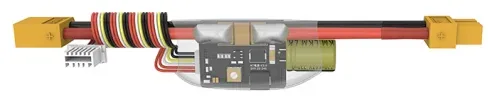
2–14S power module with 5.2 V output and battery voltage and current monitoring
Autopilot
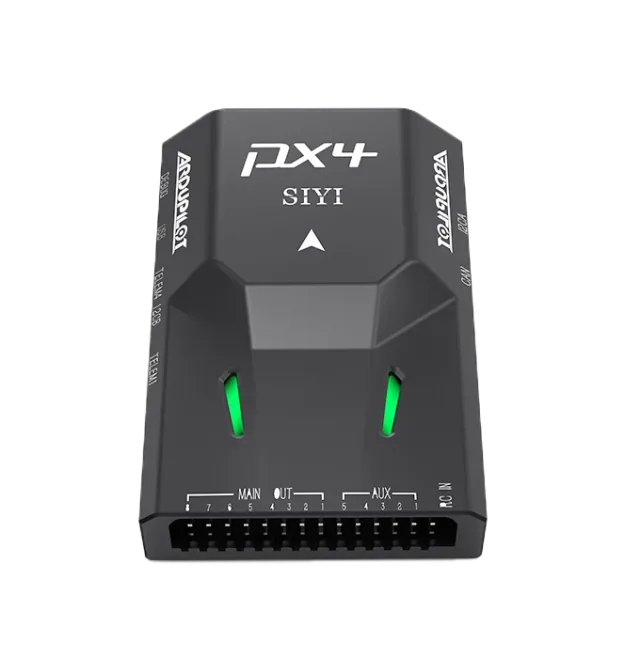
ArduPilot / PX4 autopilot with STM32H7, redundant dual IMUs and built-in shock absorption
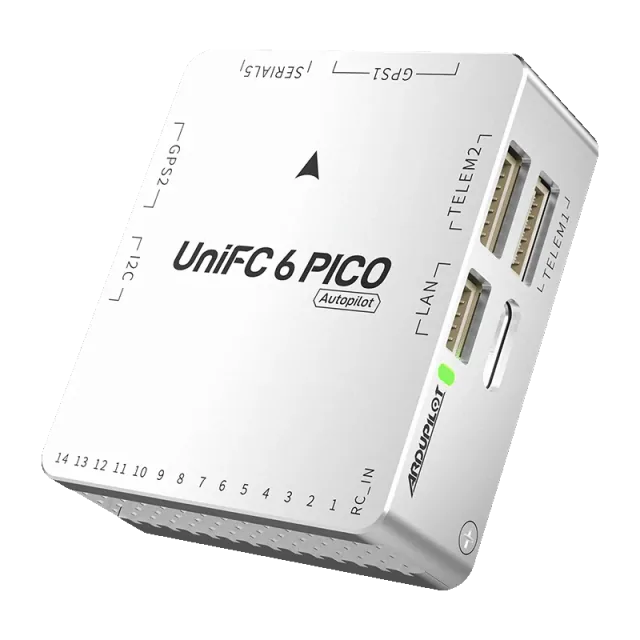
Autopilot
Compact ArduPilot / PX4 autopilot with STM32H7, dual IMU and barometer, 100 Mbps Ethernet
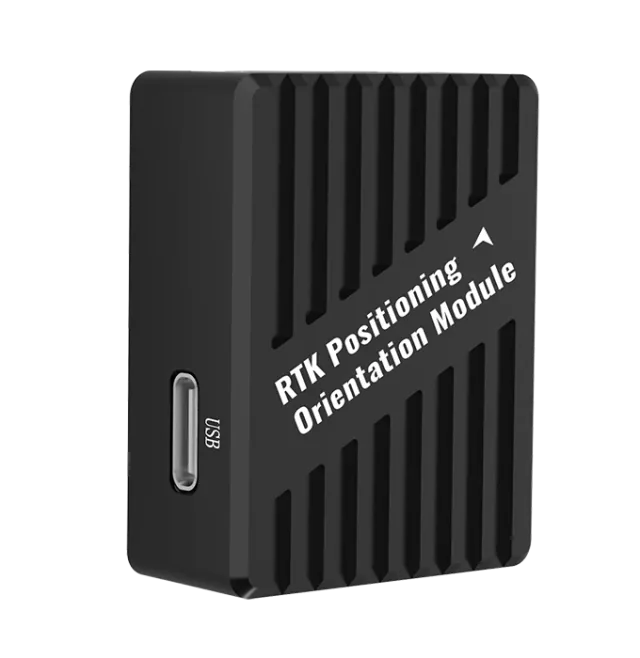
Autopilot
Single-module, dual-antenna multi-frequency RTK receiver with a PNI RM3100 compass
Send us your requirements for more information, a quotation or advice on choosing a configuration.