N7 Autopilot on a Tracked Inspection UGV: An ArduPilot Rover Set-Up
SIYI's integration exercise puts the N7 autopilot, UniRC 7 and A8 mini on a tracked inspection UGV running ArduPilot Rover: set-up, steps and what carries over from drones.
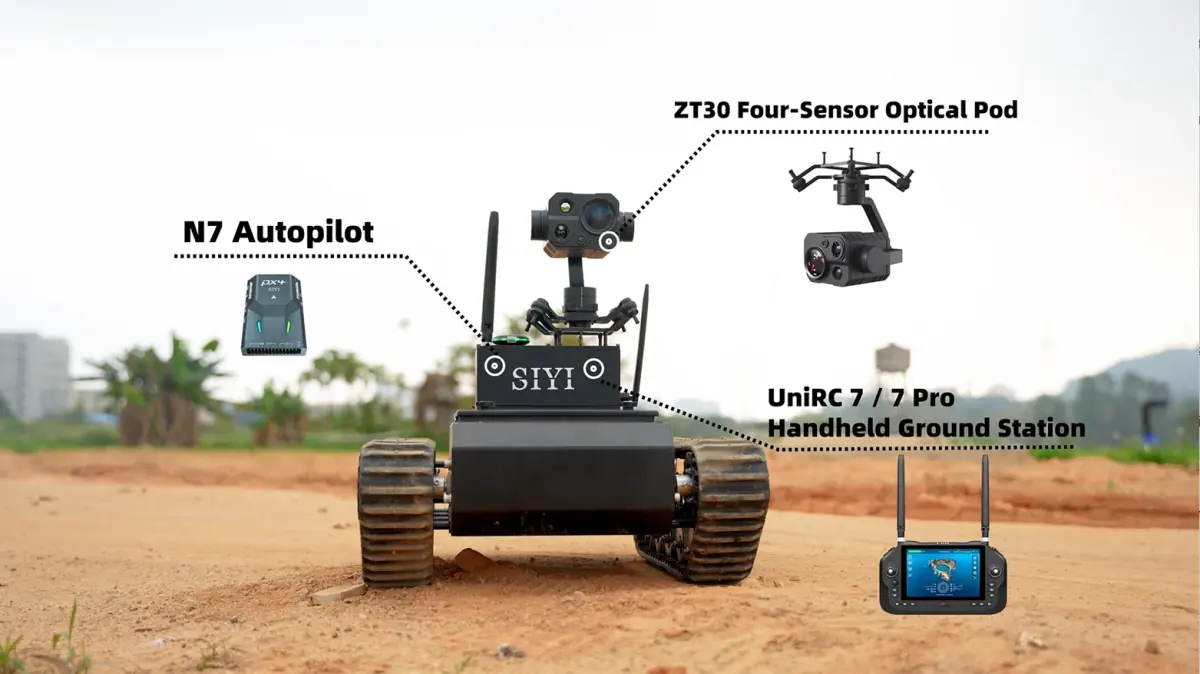
Flight controllers for drones are mature, but controllers for ground vehicles are not. In a story published on 1 September 2025, SIYI describes using its N7 open-source-ecosystem autopilot as the controller of a tracked inspection UGV. SIYI says it began exploring the N7 on ground and surface vehicles with client teams in early 2025.
SIYI presents the worked example as a simulated development, in other words an integration exercise and not a fielded customer vehicle. The story gives no test results.
UGV control challenges
- Rough ground: slopes, muddy paths and obstacles demand accurate, responsive control to keep the vehicle on its intended track.
- Stability and safety: interference is stronger at ground level, so the controller must resist it without freezing or crashing.
- Expansion: spraying, harvesting and inspection each add their own equipment, which calls for plenty of I/O interfaces.
- A limited ecosystem: there are fewer controller and software options than for drones, and closed-source products restrict fast development and upgrades.
The integration set-up and steps
The exercise combined five components:
- Tracked inspection UGV chassis
- UniRC 7 handheld ground station with its air unit
- GPS module
- N7 autopilot
- A8 mini gimbal camera
SIYI lists four integration steps and puts the process at under 5 minutes:
- Download the N7 ArduPilot firmware package from SIYI's website.
- Install the Rover firmware with the Mission Planner ground station.
- Calibrate the accelerometer and compass. SIYI recommends rotating the whole vehicle to reduce the effect of magnetic interference.
- Configure the remote control buttons.
After that, the operator drives the vehicle from UniGCS, which provides one interface for UAVs, UGVs and USVs.
What a drone-grade controller brings to ground and surface vehicles
SIYI's argument is that a UGV or USV builder can reuse a mature flight-control ecosystem instead of depending on a closed controller. ArduPilot and PX4 have active developer communities, tutorials and plugins. Drone-grade hardware adds interfaces for devices such as infrared cameras, LiDAR and flow sensors, along with proven control algorithms and IMU redundancy. For the N7, the story lists:
- Processor: STM32H743IIK6 (480 MHz, 2 MB flash, 1 MB RAM) with an STM32F103 coprocessor
- Redundancy: dual IMUs and dual magnetometers, one in the GPS module and one on board
- Cold conditions: a heated IMU keeps the unit operating at -20°C
- Positioning: centimetre-level accuracy when paired with SIYI's RTK positioning module and an F9P RTK base station
- Missions: waypoints set on a map, with single-click mission start and return
SIYI estimates that building on the UAV flight-control ecosystem shortens UGV and USV development cycles by about 60%. This is the company's own estimate; the story does not show how it was measured.
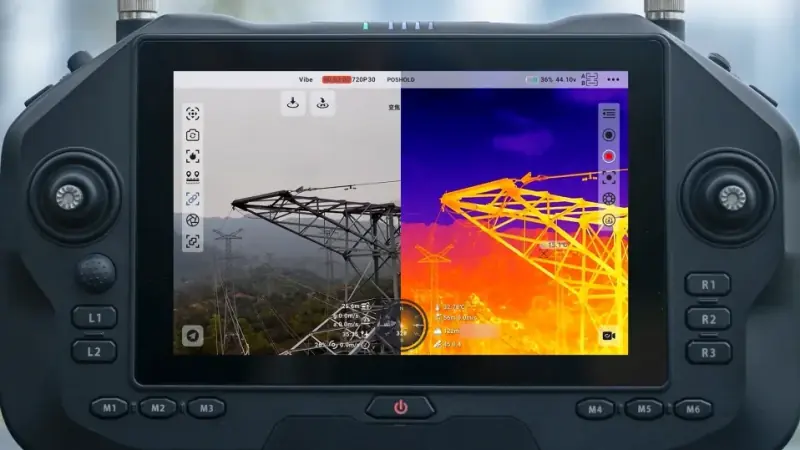
On the software side, the story lists UniGCS functions including AI tracking and following, visible and thermal split-screen, laser rangefinder and custom geofencing. To discuss a ground or surface vehicle project, contact us.
This article is a summary written from a report published by SIYI. Read the original on the SIYI website