Power Tower Inspection Drill with the ZT30 Multi-Sensor Gimbal Camera
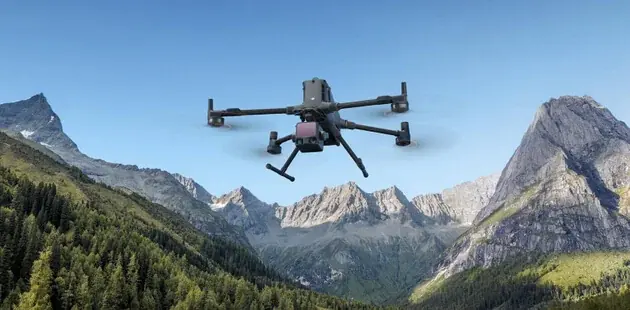
In a July 2025 drill at a partner's invitation, SIYI's team flew the ZT30 gimbal camera on an industrial multirotor to inspect a transmission tower with zoom and thermal imaging.
Inspecting a transmission tower by UAV means spotting small defects from a safe distance, in an environment with strong electromagnetic fields. In July 2025, at a partner's invitation, SIYI's team and client technicians ran a practical drill: a detailed tower inspection with the ZT30 multi-sensor gimbal camera on an industrial multirotor. SIYI published its account on 1 September 2025.
It was a drill, not a commercial rollout, and the results below are as SIYI reports them.
The inspection problem: four challenges
- Unclear imaging: fine cracks, missing pins and corrosion spots are hard to resolve from a safe distance, and vibration or wind blurs the image at full zoom.
- Hidden faults: abnormal heating, for example in tension clamp lead plates, is invisible to the eye and needs a thermal sensor.
- Low efficiency: inspections are large and complex, so operators need help filtering what matters.
- Electromagnetic interference: strong fields around high-voltage lines can disturb gimbal control, video transmission and sensors.
Equipment used in the drill
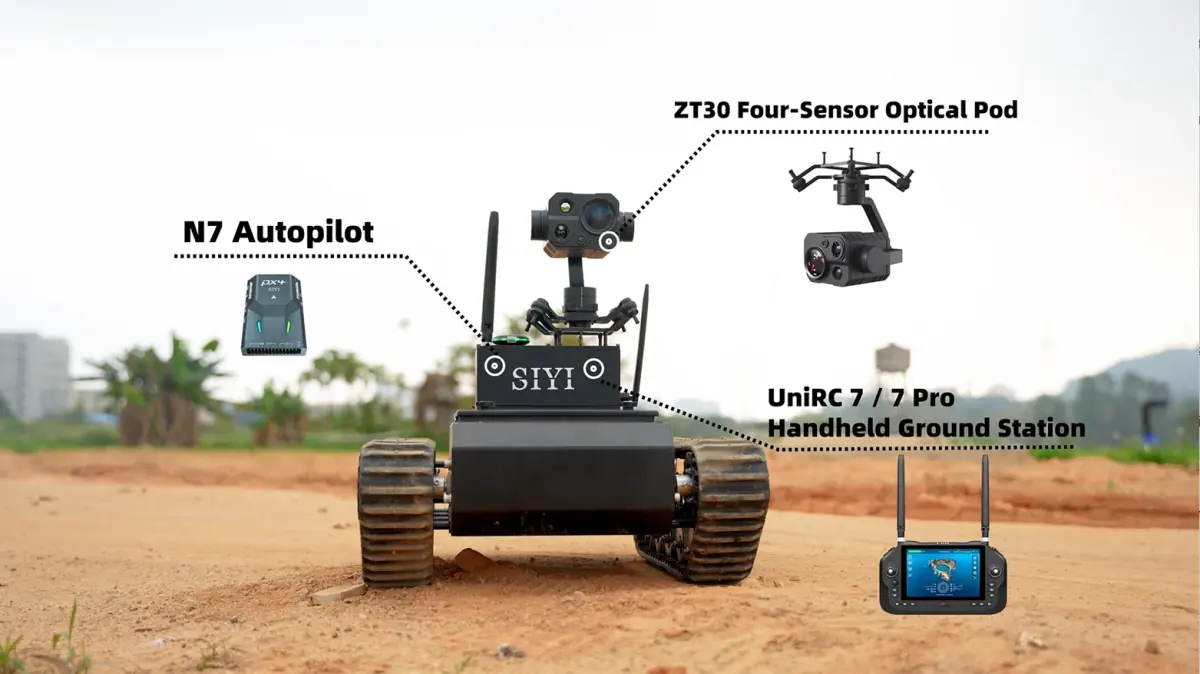
The ZT30 flew on a Reebot Robotics UniDrone E900 industrial multirotor and was operated from a UniRC 7 Pro handheld ground station running UniGCS ground control software.
| Item | Details given in the source |
|---|---|
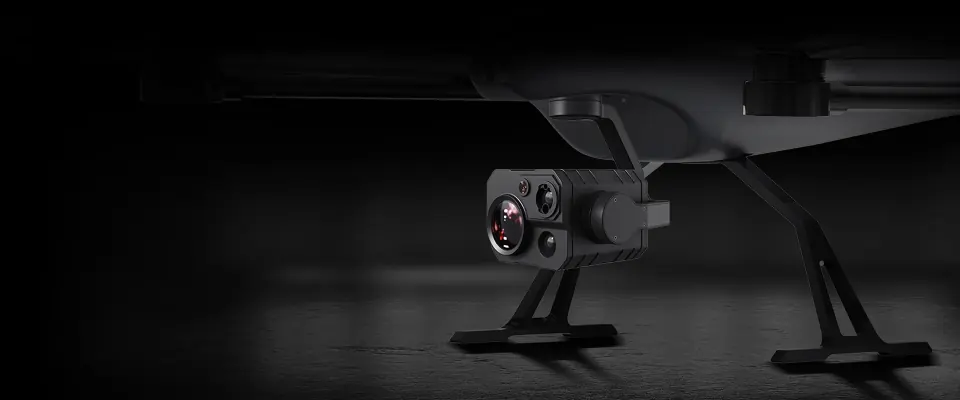
| ZT30 sensors | Wide-angle, zoom and thermal cameras plus laser rangefinder |
| Zoom | 30x optical, 180x hybrid |
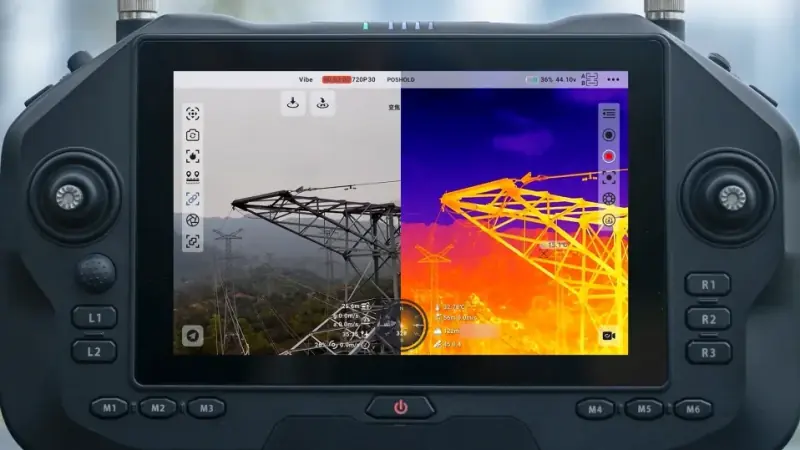
| Thermal | 640×512; split-screen with the visible image; point, area and global temperature measurement |
| UniGCS functions | Route planning, dual-channel video display, one-touch photo, video, gimbal and thermal control |
How the inspection ran
- System check and take-off. The ZT30 was fitted to the E900 with an anti-vibration quick-release mount. After battery, fastening and lens checks and frequency pairing, the UAV took off from open ground.
- Visible-light inspection. High zoom showed dirt build-up and rusted counterweights; the crew also noted damaged insulators and shifted vibration dampers. A wide-angle pass picked up a dangling phase sequence plate and a bird's nest on top of the tower.
- Thermal inspection. Using the UniGCS split-screen view with linked zoom, the team checked temperatures at key points and found no abnormal heating in the tension clamp lead plates or the tower structure.
- Return and archiving. After landing, the crew exported the visible and thermal imagery for analysis and for comparison over time.
What the drill showed
SIYI maps the outcome back to the four challenges. For image clarity it credits 30x optical zoom with 4K imaging and the 3-axis stabilized gimbal, which kept detail sharp at full zoom; unlimited yaw rotation gave 360° coverage. For hidden faults, the split-screen view with linked zoom made temperature comparison efficient.
On efficiency, SIYI notes that the ZT30 can recognize components such as insulators when paired with the AI Tracking Module II; that module is not in the drill's equipment list. On interference, SIYI reports no video flicker or signal loss.
These observations come from a single drill reported by SIYI, with no measured detection rates or time savings; it is a workflow demonstration, not a benchmark.
To plan a similar set-up, browse the gimbal camera range or contact us with details of your aircraft and inspection targets.
This article is a summary written from a report published by SIYI. Read the original on the SIYI website