How to Choose a UAV Gimbal Camera for Industrial Drone Work
What to check before choosing a UAV gimbal camera: sensors, zoom, stabilization, mounting, interfaces and protection, with six SIYI models compared from their specifications.
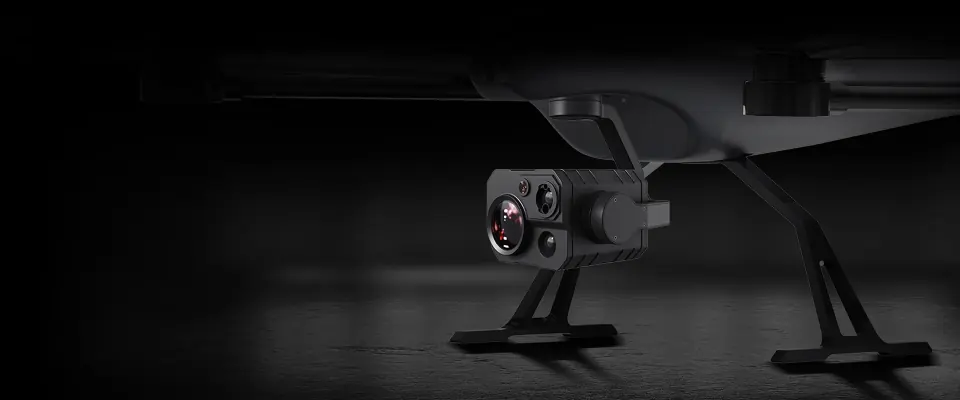
A gimbal camera turns an unmanned aircraft into a working sensor platform. Motors on each axis counteract the vehicle's movement, so the image stays level and steady while the operator aims the lens wherever the task requires.
Choosing a UAV gimbal camera, or any industrial drone camera, means matching sensors, zoom, weight and interfaces to the airframe and the job. This guide covers those decisions and compares six SIYI gimbal cameras for UAV systems, using published specification figures.
Six decisions that narrow the choice
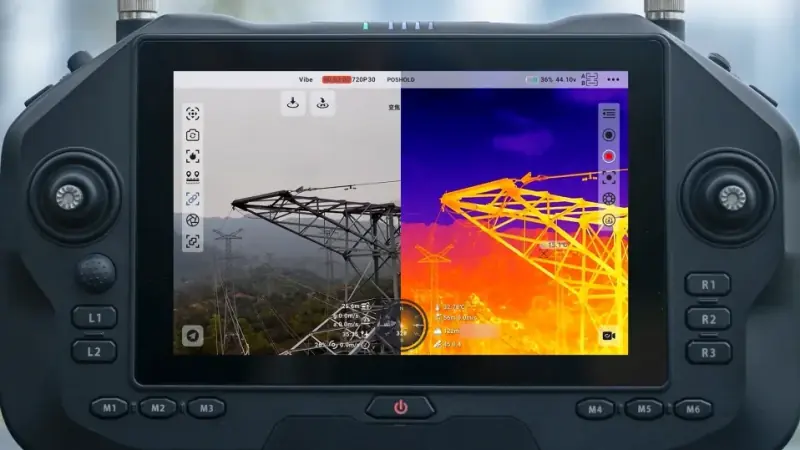
- Sensors: a visible-light camera identifies targets in daylight, a thermal imaging camera shows temperature differences even in darkness, and a laser rangefinder measures distance. ZT30 has all three plus a wide-angle camera, ZT6 pairs visible with thermal, and the rest are visible-light only.
- Zoom: optical zoom changes the lens focal length and keeps detail; digital zoom enlarges an image already captured; hybrid zoom combines both. ZR30 and ZT30 list 30X optical (180X hybrid), ZR10 lists 10X optical (30X hybrid), while ZT6 and A8 mini have a fixed focal length with 6X digital zoom.
- Stabilization and yaw: five models stabilize yaw, pitch and roll. Controllable yaw is limitless on ZT30, -270° to +270° on ZT6 and ZR30, and -160° to +160° on ZR10 and A8 mini. A2 mini lists pitch control only.
- Weight and mounting: payload weight directly reduces endurance, and this line-up spans 85 g to 854 g. For aircraft noses, ground vehicles, boats or robot dogs, check the mounting modes: every model is described with upside-down mounting, and all except ZR10 with nose mounting.
- Video and control: all six output video over Ethernet; ZT6 and A8 mini add CVBS and Micro-HDMI, ZR30 adds Micro-HDMI. The five 3-axis models take S.Bus, UART and Ethernet (UDP/TCP) control and are listed as compatible with ArduPilot and PX4 via MAVLink; A2 mini takes S.Bus, PWM or Ethernet UDP.
- Protection and temperature: an IP code's first digit rates protection against solid particles and its second against water; X means not stated. ZT6 lists IP53; ZT30, ZR30 and A8 mini list IP4X; ZR10 and A2 mini list none. All six state a working temperature of -10 to 50 ℃.
SIYI gimbal camera line-up compared
Values come from each model's specification table; a dash means no entry.
| Model | Sensors | Zoom | Thermal resolution | Video output ports | Weight | Ingress protection |
|---|---|---|---|---|---|---|
| ZT30 | Zoom, thermal and wide-angle cameras, laser rangefinder | 30X optical (180X hybrid) | 640 × 512 | Ethernet | 854 g (including quick-release anti-vibration claw) | IP4X |
| ZT6 | Fixed-focal-length and thermal cameras | 6X digital | 640 × 512 | Ethernet / CVBS / Micro-HDMI | 177 g (197 g with anti-vibration board) | IP53 |
| ZR30 | Zoom camera | 30X optical (180X hybrid) | - | Ethernet / Micro-HDMI | 668 g (quick release board included) | IP4X |
| ZR10 | Zoom camera | 10X optical (30X hybrid) | - | Ethernet | 381 g | - |
| A8 mini | Fixed-focal-length camera | 6X digital | - | Ethernet / CVBS / Micro-HDMI | 95 g | IP4X |
| A2 mini | Camera with 160° horizontal FOV | - | - | Ethernet | 85 g | - |
Recognition and tracking are not built in: the optional SIYI AI Tracking Module II adds them. Its specification lists ZT30, ZT6, ZR30, ZR10 and A8 mini as compatible, and people, vehicles, boats and insulators as recognizable objects. UniPod MT11 is also in the catalogue, but the manufacturer's site publishes no specification table for it, so it is omitted.
Which model suits which job
- Inspection: ZT30 combines 30X optical zoom, 640 × 512 thermal imaging with temperature measurement and a 5–1200 m laser rangefinder, so a heat source can be found, examined closely and ranged during inspection work. ZT6 offers the same thermal resolution at 177 g without its anti-vibration board.
- Search and rescue: a drone thermal camera reveals heat sources that a visible camera can miss at night, making ZT30 and ZT6 the starting point for emergency rescue aircraft.
- Security patrol: ZR30's 30X optical zoom lets a crew examine detail from a distance, and ZR10 gives 10X optical zoom at 381 g. In security projects, treat them as payloads for patrol platforms: SIYI's FAQs say ZT6, ZR30 and ZR10 cannot be used as surveillance cameras.
- Small multirotors and VTOL aircraft: A8 mini weighs 95 g, records 4K and outputs through Ethernet, CVBS or Micro-HDMI, a single-sensor option when payload margin is thin.
- Agricultural aircraft: A2 mini is an 85 g single-axis FPV camera with a 160° horizontal field of view, placed by SIYI in its agriculture payload category and described as designed to withstand water and pesticides. Its specification table states no IP rating, so confirm it with us; the separate Industrial-Grade HD FPV Camera lists IP67.
Next steps
Compare your candidates on the compare page or shortlist them in the product finder. Then contact us with your airframe, video link and flight controller so we can confirm interfaces, mounting and accessories.
Frequently asked questions
Which SIYI gimbal cameras include thermal imaging?
ZT30 and ZT6 both list a 640 × 512 thermal imaging camera. ZT30 adds a 30X optical zoom camera, a wide-angle camera and a 5–1200 m laser rangefinder.
Is AI target tracking built into the gimbal cameras?
No. Recognition and tracking require the optional SIYI AI Tracking Module II, whose specification lists ZT30, ZT6, ZR30, ZR10 and A8 mini as compatible.
Can these gimbal cameras be mounted on a ground vehicle or boat?
All six models are described with an upside-down mounting mode, which SIYI points to for UGVs, USVs and robot dogs. Check the control and video ports against your onboard system first.